
Your shopping cart is empty!

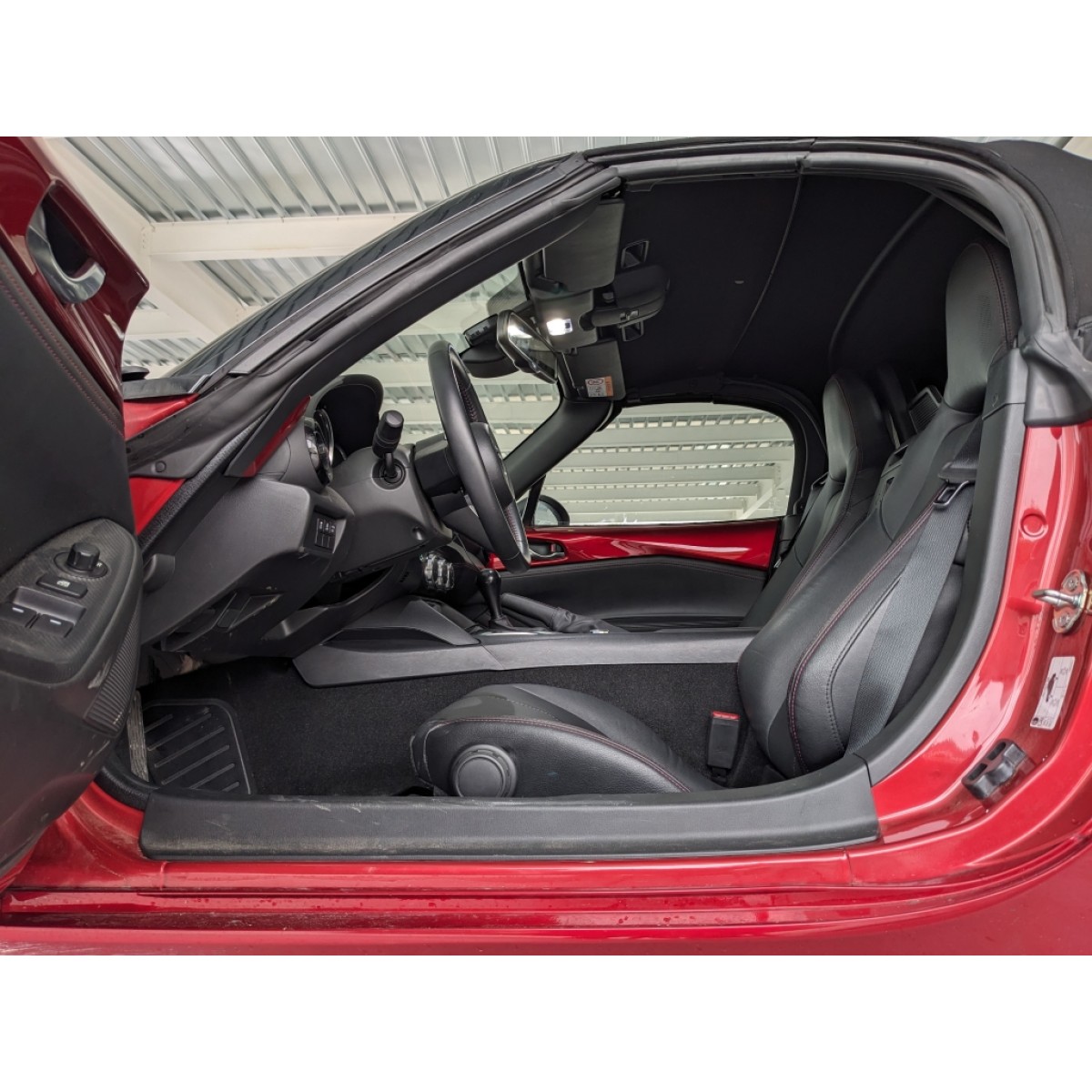
Jass Performance Seat Lowering Slider Rails for the Mazda MX-5 (ND), Fiat 124 Spider — compatible with OEM and Recaro seats.
A complete solution for tall drivers who no longer fit comfortably in the ND. The rails lower the seat 48mm, the full OEM sliding function is retained, and the installation is bolt-on and fully reversible — no cutting, no permanent modifications.
For any driver above 185cm, a properly lowered seat is also a safety matter — not just comfort. Correct headroom restores proper engagement with road information, full use of the rear-view mirror, and a driving position that lets you react rather than manage the car around your height.
These products were developed by someone who needed them personally — at 197cm, the designer of this range has spent years refining every millimetre of the solution from the driver's seat. Every question answered here, every trade-off explained, every recommendation in the decision guide comes from that direct experience, combined with feedback from hundreds of customers across the UK, EU, and USA. You're not just getting a part — you're getting the accumulated knowledge of what actually works, from someone who still drives an ND daily at the height this was designed for.
Mazda MX-5 ND (all versions, OEM and Recaro seats), Fiat 124 Spider — soft-top and RF.
Fine Drop Adjustment Kit. Lets you reduce the drop in 5mm steps — 33, 38, 43, or 48mm — using aluminium shims aligned under the rails. Recommended for drivers below 177cm, and useful for adjusting the car between drivers of different heights. It is also common when sharing the car with a partner to combine this with a bolster seat, which compensates comfortably for the height difference without changing the rail setup.
Backrest Raising Kit. When the seat is lowered, raising the backrest restores the intended ergonomics — aligning the headrest, side supports, speakers, and belt guides to where they work best for a tall driver. The factory seat is a compromise for all heights; this kit corrects it for yours.
For the complete background on seat lowering in the ND — ergonomics, trade-offs, and how to get the best fit for your proportions — see the full decision guide or browse all seat lowering techniques including free modifications.
Bolt-on installation with basic hand tools — no special skills, no garage visit required. Installation guides and video support are included.
We also work with experienced MX-5 specialists for fitting:
Contact us if you would like your kit shipped directly to one of these partners.
Select your side and any optional kits above. Same-day shipping from EU and UK.
Both front and rear are lowered. The rear drops 33–48mm depending on configuration. The front drops approximately 15mm as part of the rail geometry. Removing the height adjustment rack drops the front a further 15–22mm on top of that — a free, reversible modification that extends the benefit further.
Yes, with the Fine Drop Adjustment Kit. For drivers under 177cm, the kit reduces the drop (33–48mm in 5mm steps) so the seating angle stays comfortable. From 177cm upward, the standard 48mm works on its own.
A helmet adds 40–50mm above your head and effectively changes your proportions — in seating terms you become a long-upper-body, short-legged driver. That profile needs a low, flat seat rake rather than the steeper rake of sliding rails. The best option is the fixed adapters combined with the Fine Drop Adjustment Kit, which give the flat rake needed to get your helmet under the broomstick line.
With sliding rails, the raised front of the seat can stop you using the full drop at the rear. The fixed adapters sit flatter and make better use of the available drop, so they're the better choice for a heavier body.
Long legs suit the rake of the sliding rails well. Go with the 48mm rails and detension the backrest for the most natural, stretched-out driving position.
The 48mm suits nearly every tall driver (177–194cm, and below 177cm with the Fine Drop Adjustment Kit). The 58mm is a maximum-drop version intended for drivers above 193cm who need every millimetre of headroom.
Adjustability is the obvious one — the rails keep the full fore/aft slider, the fixed adapters don't. But the more important difference is the seat base rake. The sliding rails raise the front of the seat slightly, creating an angle that opens up headroom. The fixed adapters sit flatter. So if you're not particularly tall but need to sit as low as possible — for a helmet, for proportion reasons, or for track use — the fixed adapters are the better choice.
If you're coming from the NA/NB world or have done any DIY on an NC, you'll be perfectly fine. If removing the seat, detaching the battery, disconnecting the airbag connector, and pulling the seat plastic trim sounds like too much — find a nearby garage. It's a straightforward job, just not one to rush.
Exactly as easy as removing the OEM seat — 4 bolts and a connector. Nothing changes there.
The seat lowers and plants you deeper in the car, but it cannot extend the car — the pedal positions don't change. If heel-and-toe is the issue, check the dedicated article on additional measures that create perceived extra leg room. Those measures work best in combination with a lowered seat.
The belt tensioner trim will collide with the seat trim at the lowest position. The common fix is to remove the tensioner trim or replace it with a piece of black carpet. This is a US-market issue — no equivalent trim exists on European cars, so there's no dedicated solution for it.
| Mazda MX5 Model | |
| ND (MK4) | |
|---|---|


| Name | |
-1200x1200.jpg "Seat Lowering Slider Rails, 48mm (1.9\") - MX5 ND/Fiat 124 Spider")


-80x80.jpg)


